

Automatisation des Indicateurs de Portefeuille Clients : Sécuriser votre fonds de commerce
Automatisation des Indicateurs de Portefeuille Clients : Sécuriser votre fonds de commerce
Walid Bergaoui
Log in to comment.
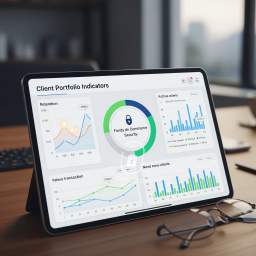
Your business's core asset isn't your furniture or your inventory: it's your customer base. And yet, you're probably still managing it "by feel," caught between a spreadsheet that never updates and your sales reps' intuition. Who are your champion customers? Which ones are about to defect to a competitor? Which ones cost you more in after-sales service and follow-ups than they bring in margin? This training teaches you to answer these questions at a glance, by automating your portfolio indicators instead of rebuilding them by hand every quarter.
The approach is decidedly data-driven and hands-on. You start from your real data — invoicing, orders, interactions, payments collected — and build, step by step, a living segmentation of your customer base. You implement the RFM method (Recency, Frequency, Monetary value) to automatically rank your customers as Champions, Potentials, At-Risk Customers, and Dormant, then you wire up alerts that notify the right sales rep before a customer slips away. Finally, you connect sales to accounting: unpaid invoices, credit limit overruns, and customer risk become visible directly within the tool, so you never again book revenue with a bad payer.
By the end of the program, you don't walk away with yet another theory, but with a true control cockpit for your portfolio: indicators that calculate themselves, segments that refresh in real time, and alerts that turn your entire team into guardians of the business asset and of a cash culture. Automating these indicators means protecting tomorrow's revenue by understanding, starting today, the behavior of each one of your customers.
A training measured by what remains once the final session is over:
Your operational RFM scoring — a segmentation model applied to your own customers, ready to run and refresh on its own.
An automated dashboard — your portfolio KPIs (customer value, churn, margin, outstanding balances) brought together on a clear, always up-to-date cockpit.
Your customer risk alerts — triggers configured to flag churn, unpaid invoices, and credit limit overruns at the right moment.
A sales action plan — the right action for each segment: retain, grow, save, or reactivate.
A journey that starts from your raw data to arrive at a living cockpit for your customer portfolio: first understand and prepare the data, then segment and score, next connect financial risk, and finally automate the alerts and move to action.
1. The customer portfolio as an asset — why your customer base is your real business asset, the stakes of churn and customer value, and the limits of managing "by feel" and with a spreadsheet.
2. Map your data sources — invoicing, orders, after-sales service, interactions, payments collected: where your data lives and how to bring it together cleanly.
3. Clean and make reliable — duplicates, incomplete records, outliers: preparing a clean base, the prerequisite for accurate indicators.
4. The RFM method — Recency, Frequency, Monetary value: calculating the three scores that summarize each customer's buying behavior.
5. Build your segments — turning scores into meaningful groups: Champions, Potentials, At-Risk Customers, Dormant, and the thresholds tailored to your business.
6. Customer value and potential — real margin, customer lifetime value, spotting upsell and cross-sell opportunities among your Potentials.
7. From sales to accounting — bridging sales and payments collected to make unpaid invoices, outstanding balances, and late payments visible.
8. Customer risk scoring — rating risk (credit limit overruns, bad payers), blocking risky orders, and spreading a cash-collection culture.
9. Dashboard and alerts — bringing your KPIs together on a cockpit that refreshes on its own and configuring churn, unpaid invoice, and credit limit overrun alerts to the right sales rep.
10. The action plan by segment — matching the right action to each profile (retain, grow, save, reactivate) and anchoring a lasting management routine.
Automatisation des Indicateurs de Portefeuille Clients : Sécuriser votre fonds de commerce
Automatisation des Indicateurs de Portefeuille Clients : Sécuriser votre fonds de commerceLog in to comment.
Be the first to comment.