

Search

Solutions Catalog

Explore our technology integration and automation programs.

All BSF STARTUP LABS Open Courses Professional Training Services & Consulting
Brand Communication Strategy: Speaking Right, in the Right Place, at the Right Time

Brand Communication Strategy: Speaking Right, in the Right Place, at the Right Time

Your brand is already speaking. Every post, every visual, every silence says something about it — whether you decided so or not. This training teaches you to ta...

Your brand is already speaking. Every post, every visual, every silence says something about it — whether you decided so or not. This training teaches you to take back control of that discourse: not to speak louder, but to speak more precisely, in the right place and at the right time. Brand communication does not seek to sell directly or to define the offering; it builds a coherent, credible and lasting image, one that makes you recognizable at first glance and trusted over time. The approach is concrete and strategic. You start by distinguishing what is too often confused — communication, marketing and sales — in order to understand the specific role of each lever. You then define your brand's communication identity: its tone, its stance, its expressed values, its visual and narrative style, so that all your materials speak with a single voice. Next, you learn to choose your channels according to their real function — awareness, image, education, reassurance, engagement, reputation — and to allocate your budget so as to invest where the impact is strongest, without spreading yourself thin. By the end of the program, you will be able to design a brand communication strategy that is coherent, budget-conscious and objective-driven : a plan over time, aligned messages, materials chosen with intention, and indicators that measure what really matters. You will know how to avoid the mistakes that weaken a brand — multiplying messages, changing tone, communicating without direction — in order to build, one statement after another, a relationship of trust that grows your brand's value over the long term. Not just concepts, but ready-to-use deliverables to steer your brand's communication starting the very next day: A communication platform — your brand's tone, stance, values and style, formalized and shareable. A media and budget plan — each channel tied to a clear objective, and your resources allocated where they count. A communication calendar — for regular, consistent and coherent communication over time. An indicators dashboard — visibility, perceived consistency, engagement, recall and image, to steer without getting lost in numbers alone.

Marketing Strategy

Marketing Strategy

doesn't sell: it paves the way for the sale. Before the first ad, before the first sales meeting, it answers a decisive question — why should a customer choose ...

doesn't sell: it paves the way for the sale. Before the first ad, before the first sales meeting, it answers a decisive question — why should a customer choose you, and not someone else? This program teaches you to answer it through clear choices: distinctive positioning, well-defined targets, a strong value proposition, and messages that hit home. Because a brand that knows what it is makes the offer desirable and the sales work effortless. The approach is concrete and decision-driven. You start by reading your market — customers, competition, segments — then you shape your positioning and build a value proposition that aligns messaging, image, and experience. You then move on to meaningful action: choosing the right channels and formats, building a content strategy that is relevant rather than omnipresent, and establishing a brand that inspires trust through branding, storytelling, and visual consistency. A strong brand shortens the decision cycle and increases the perceived value of your offer. Finally, you learn to steer: setting objectives, tracking the right metrics, reading results, and adjusting continuously — because a marketing strategy is never set in stone. You'll also know how to avoid common pitfalls: mistaking actions for strategy, communicating without positioning, copying the competition, or multiplying channels without consistency. By the end of the program, you'll be able to design and steer a clear, consistent, value-driven marketing strategy that attracts the right customers, strengthens your brand, and sustainably supports sales performance — without ever replacing it. More than concepts: a ready-to-deploy strategy, built for your own market. Your complete strategic plan — positioning, targets, and value proposition formalized, ready to guide all your actions. Your content and channel plan — the right messages, on the right platforms, for the right targets. Your brand platform — consistent messaging, tone, and visual cues to build trust. Your dashboard — the key metrics to measure, decide, and adjust continuously.

Sales Strategy

Sales Strategy

You have a product, an offer, commercial energy — but do you sell with a method or by sheer effort? Sales strategy is what separates the company chasing its cus...

You have a product, an offer, commercial energy — but do you sell with a method or by sheer effort? Sales strategy is what separates the company chasing its customers from the one that knows exactly who to target, how to approach them and how much they're worth. Here, you won't learn to communicate more or run more advertising: you'll learn to organize the act of selling intelligently, to focus your energy where it truly generates revenue, and to turn an unstable pipeline into a predictable flow of sales. The approach is concrete and field-oriented. You start from a simple principle — selling is not improvising — to build your strategy step by step: identifying your high-value customers, segmenting your portfolio, prioritizing your opportunities and tailoring your message to each customer profile. You then master every stage of the sales process, from prospecting to closing, then grow your revenue per customer — retention, upselling, key accounts — before learning to steer it all with the right metrics. By the end of the program, you'll be able to design, deploy and steer a clear sales strategy, results-oriented and adapted to your field reality. You'll know how to align your team on clear priorities, eliminate pointless actions, secure your sales and reduce your dependence on a handful of customers. You leave not with theories, but with a sales action plan you can deploy the very next day — because a solid sales strategy doesn't just sell once: it secures growth over the long term. Not just knowledge: ready-to-use tools to structure your selling starting tomorrow. Your sales action plan — priority targets, clarified segmentation and offers, ready to deploy in the field. Your structured sales process — from prospecting to closing, every stage equipped, measured and repeatable. Your sales dashboard — realistic targets, performance indicators and variance tracking to steer by the numbers. Your scripts and negotiation frameworks — a pitch tailored to each customer profile and to the objections you face in the field.

Aligning Your AI Agent: Building a Smart Assistant That Understands Your Style, Expectations, and Way of Working

Aligning Your AI Agent: Building a Smart Assistant That Understands Your Style, Expectations, and Way of Working

What if your AI assistant ended up truly knowing you? Not an anonymous tool that starts from scratch with every request, but a working partner that grasps your ...

What if your AI assistant ended up truly knowing you? Not an anonymous tool that starts from scratch with every request, but a working partner that grasps your tone, anticipates your priorities, gauges your standards, and gets it right the first time. This training starts from a powerful insight: the more you work with the same AI agent, the more effective it becomes. Through consistent exchanges, it aligns with your professional temperament, refines its answers, and eliminates pointless back-and-forth. Here you'll learn to shape this alignment rather than simply endure it. Defining your agent's role, its level of formality, its communication style, its language preferences, its limits, and its goals: a well-configured agent understands faster and answers more accurately. You'll also discover why spinning up multiple agents for the same purpose is counterproductive — every switch forces you to explain everything again — and how, instead, to build on a small number of well-configured assistants that continuously learn from you. Finally, the training explores the relational dimension of AI — recognizing your tone, adapting to your humor, staying consistent across exchanges — without ever losing sight of what matters most: staying in control, checking the answers, and remaining the one who makes the decisions. The goal is not to humanize the machine, but to turn it into a truly personalized assistant. By the end, you'll know how to align an AI agent with the way you think and work, save a tremendous amount of time, and build an effective, consistent, and lasting partnership. Not just concepts: an assistant already shaped in your image and a method you can reuse for life. Your ready-to-use alignment profile — role, tone, rules, and preferences written down, ready to paste into your agent. A memory that lasts — a reusable context file so your agent retains your habits from one session to the next. A library of prompts — the wordings that work for you, organized and reusable day to day. The control reflex — checking, correcting, and keeping the upper hand, to save time without ever blindly relying on AI.

Mastering the Art of Prompting: Getting Precise, Actionable Results from Artificial Intelligence

Mastering the Art of Prompting: Getting Precise, Actionable Results from Artificial Intelligence

Knowing how to open an artificial intelligence is no longer enough: everyone does it. What separates an ordinary result from a remarkable one is the way you fra...

Knowing how to open an artificial intelligence is no longer enough: everyone does it. What separates an ordinary result from a remarkable one is the way you frame your request. The prompt is your voice, your specification sheet and your conductor's baton — whoever knows how to compose it turns a generic tool into an assistant tailored exactly to their needs. This training teaches you precisely that: moving from a fuzzy idea in your head to an instruction so clear that the AI answers you correctly, on the first try. The approach is concrete and immediately applicable. You first learn to structure a prompt — setting the context, the objective, the role expected of the AI and the output format — then to sharpen your language with constraints, examples and quality criteria that eliminate vague answers. You then discover how to iterate intelligently: correcting, rephrasing and guiding the AI to converge quickly on the right result, and how to adapt your wording depending on whether you are generating text, images, video or an analysis. Each session ends with a prompt that you keep and reuse. By the end of the course, you converse with the AI as you would with an expert collaborator: you know what you are asking for, you know how to ask for it, and you know how to judge the answer. You also keep a critical mind — spotting inaccuracies, outsmarting biases, checking the facts — because the final decision remains yours. You leave with a repeatable method and a library of prompts ready to use, in your work as well as in your personal projects. Not just concepts, but concrete tools that you take away the very same day: A library of prompts — ready-to-use templates, sorted by use case, that you adapt in a few seconds. A repeatable method — a clear framework to build, test and refine any prompt, whatever the tool. A verification checklist — to spot biases, errors and approximations and validate every result before using it. Conversational ease — the ability to converse with the AI on any topic, text as well as image, with confidence and precision.

Introduction to Artificial Intelligence

Introduction to Artificial Intelligence

Artificial intelligence is no longer a distant promise: it's a lever you can activate today to save time, make better decisions, and do more with the same resou...

Artificial intelligence is no longer a distant promise: it's a lever you can activate today to save time, make better decisions, and do more with the same resources. This training takes a simple stance: AI doesn't replace you, it augments you. You stay in control — the vision, the expertise, and the judgment are yours — and you learn to make AI a true day-to-day copilot. No technical prerequisites: we start from scratch, explain everything in plain terms, and turn each concept into a skill you can use the very next day. The approach is decidedly hands-on. First, you understand what AI really is, how it "thinks," what it can do and what it can't — so you can use it with clarity rather than be at its mercy. Next, you discover its major families: generative AI that writes texts, images, and ideas; the conversational AI of assistants and chatbots; predictive AI that anticipates; and analytical AI that turns your data into decisions. Above all, you put it into practice: automating repetitive tasks, writing faster and better, processing and classifying information, supporting your analyses, and making your choices more reliable. And because real mastery requires perspective, you also learn its limits, the mistakes to avoid, and an ethical, responsible use. By the end of the program, AI will no longer be an intimidating black box but a familiar tool, naturally integrated into your work. You'll know how to choose the right AI for the right need, give it instructions that produce exactly what you expect, and keep the critical thinking that makes the difference between a use you endure and a use you master. You'll leave with lasting reflexes and use cases you can apply immediately — to turn your ideas into high-performing actions. Far more than concepts: real autonomy to make AI your everyday ally. A clear compass — you understand the major families of AI and instantly know which one to choose for which need. Ready-to-use use cases — writing, automation, data processing, and decision support, applicable the very next day. The art of asking well — effective prompts to get exactly what you want, on the first try. The right critical reflex — spotting the limits, avoiding the pitfalls, and using AI in an ethical and responsible way.

Automating Operating Income Indicators: Steering Operational Performance

Automating Operating Income Indicators: Steering Operational Performance

You run a business and you can feel it: the annual report always comes too late. By the time you discover that your operating income has dropped, the quarter is...

You run a business and you can feel it: the annual report always comes too late. By the time you discover that your operating income has dropped, the quarter is already lost. This training gives you the power to flip the logic — to move from post-mortem diagnosis to real-time steering. You'll learn to turn your raw data into a living analytical income statement that updates on its own and tells you, every month, where your operational performance is really headed. The approach is practical and field-oriented. You start with the essentials — understanding how Operating Income (EBIT) is built and reading the cascade of intermediate management balances: gross margin, value added, Gross Operating Surplus (EBITDA). You then structure your data sources, build your automated analytical P&L by product, region or channel, and bring it to life with indicators that speak: volume effect versus price effect, variances against budget, trends month after month. Then you take the decisive step — the drill-down: moving in three clicks from the overall figure down to the department, the cost category, all the way to the specific invoice that explains the variance. By the end of the program, you walk away with your own operating income dashboard — automated, interactive and ready to present to your leadership, your investors or your bank. You'll no longer be at the mercy of your numbers: you'll understand the "why" behind every result and act immediately on the right levers. This is one of BSF's flagship areas of expertise, placed in your hands. Not just concepts: an operational tool and a method you'll reuse every month. Your automated analytical P&L — a dynamic income statement that refreshes on its own, ready to use on your own data. The cascade of management balances in real time — gross margin, value added and EBITDA tracked continuously, by product, channel or region. The drill-down reflex — knowing how to drill from macro to micro to explain any variance in a few clicks. A presentation-ready dashboard — a clear, credible deliverable for your leadership, your banks and your investors.

Automating Financial Indicators: The End of Flying Blind

Automating Financial Indicators: The End of Flying Blind

How many times have you made a decision without knowing your true cash position? The tragedy of financial management is the lag: you discover your figures on th...

How many times have you made a decision without knowing your true cash position? The tragedy of financial management is the lag: you discover your figures on the 20th of the following month, sometimes only once a year at the annual close, and in the meantime you're flying blind. This training puts an end to that fog. You'll learn to connect your accounting and banking flows to make your data talk, and to turn accounting that looks at the past into a dashboard that illuminates the present moment and anticipates the future. The approach is concrete and operational. Step by step, you'll build an executive financial cockpit updated every morning. You'll bring to life the indicators that truly determine a company's fate: the Dynamic Aged Balance to know who owes you money and to accelerate collection, the Working Capital Requirement to measure whether your growth is devouring your cash, the Cash Burn Rate to anticipate your financing needs months in advance, and the structure ratios that reassure your bankers. You'll learn to automate their calculation, make them reliable, and present them so they speak for themselves. By the end of the program, you'll change your stance. You'll no longer spend your days producing figures in fragile spreadsheets exposed to the slightest copy-paste error: you'll analyze them, raise alerts, and propose optimization strategies. You'll become the leader — or the CFO — who sees what's coming, who decides on facts rather than intuition, and who inspires confidence around the table because their figures are accurate, dated today, and impossible to dispute. This is the end of flying blind. This training doesn't stop at theory: you'll walk away with deliverables ready to use in your company the very next day. Your financial dashboard — an operational executive cockpit, fed by your own data and automatically refreshed every morning. Your automated indicators — Aged Balance, Working Capital Requirement, Burn Rate, and structure ratios calculated with no manual entry, reliable and always up to date. Your smart alerts — thresholds and signals that warn you before the cash problem turns into a crisis. The pilot's mindset — the method to move from producing figures to making informed decisions, and to defend your trade-offs before the committee and the banks.

Automating Inventory Management Indicators: Turning "Dormant Stock" into Cash

Automating Inventory Management Indicators: Turning "Dormant Stock" into Cash

For your manufacturing or trading company, inventory is probably the heaviest item on your balance sheet — and the quietest. As long as it sits dormant on your ...

For your manufacturing or trading company, inventory is probably the heaviest item on your balance sheet — and the quietest. As long as it sits dormant on your shelves, it makes no noise: it simply ties up your cash, month after month. The annual stocktake that records the damage once a year is over. This training teaches you to manage your physical flows with the same rigor as your financial flows, and to make every item speak: how fast it turns, how many days of coverage it gives you, how much it costs you just sitting there. The approach is hands-on and results-driven. You start from your ERP — Sage, Odoo, Divalto or another — and connect it to Business Intelligence tools to automate the calculation of the indicators that truly matter: stock turnover item by item, coverage in days of sales, the ABC / FMR matrix that separates your vital items from your "slow movers," and the stockout rate that quantifies the revenue you're losing. You no longer just look at "how much" you have in stock: you measure the quality of that stock, continuously, with no re-entry. By the end of the program, you walk away with a living dashboard, updated automatically, that turns raw data into purchasing and stock-clearing decisions. You know how to identify dormant stock, quantify it in cash terms, and build an action plan to free it up — often 15 to 20% of stock value recovered without degrading your service level. You're the one in control: automation is merely the lever that puts your cash to work, instead of leaving it on your shelves. A skill directly applicable to your company, not one more theory: An automated inventory dashboard — your KPIs (turnover, coverage, ABC/FMR, stockouts) calculated and refreshed with no manual intervention. A map of your dormant stock — the quantified list of items tying up your cash, ready to act on. A stock-clearing and replenishment plan — concrete rules to buy smarter and free up cash. The ERP → BI connection method — to link your data and replicate the approach on other indicators.

Automating Customer Portfolio Indicators: Securing Your Business Asset

Automating Customer Portfolio Indicators: Securing Your Business Asset

Your business's core asset isn't your furniture or your inventory: it's your customer base. And yet, you're probably still managing it "by feel," caught between...

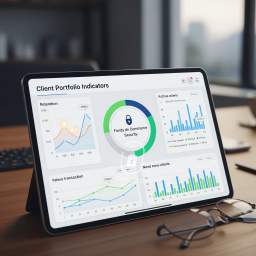
Your business's core asset isn't your furniture or your inventory: it's your customer base. And yet, you're probably still managing it "by feel," caught between a spreadsheet that never updates and your sales reps' intuition. Who are your champion customers? Which ones are about to defect to a competitor? Which ones cost you more in after-sales service and follow-ups than they bring in margin? This training teaches you to answer these questions at a glance, by automating your portfolio indicators instead of rebuilding them by hand every quarter. The approach is decidedly data-driven and hands-on. You start from your real data — invoicing, orders, interactions, payments collected — and build, step by step, a living segmentation of your customer base. You implement the RFM method (Recency, Frequency, Monetary value) to automatically rank your customers as Champions, Potentials, At-Risk Customers, and Dormant, then you wire up alerts that notify the right sales rep before a customer slips away. Finally, you connect sales to accounting: unpaid invoices, credit limit overruns, and customer risk become visible directly within the tool, so you never again book revenue with a bad payer. By the end of the program, you don't walk away with yet another theory, but with a true control cockpit for your portfolio: indicators that calculate themselves, segments that refresh in real time, and alerts that turn your entire team into guardians of the business asset and of a cash culture. Automating these indicators means protecting tomorrow's revenue by understanding, starting today, the behavior of each one of your customers. A training measured by what remains once the final session is over: Your operational RFM scoring — a segmentation model applied to your own customers, ready to run and refresh on its own. An automated dashboard — your portfolio KPIs (customer value, churn, margin, outstanding balances) brought together on a clear, always up-to-date cockpit. Your customer risk alerts — triggers configured to flag churn, unpaid invoices, and credit limit overruns at the right moment. A sales action plan — the right action for each segment: retain, grow, save, or reactivate.

Sales Indicator Automation: Stop Steering Your Sales Team Through the Rearview Mirror

Sales Indicator Automation: Stop Steering Your Sales Team Through the Rearview Mirror

Every Monday morning, the same scene plays out. You pull the figures from the CRM, you compile the sales reps' Excel files, you manually check the "remaining to...

Every Monday morning, the same scene plays out. You pull the figures from the CRM, you compile the sales reps' Excel files, you manually check the "remaining to do" formulas — and by the time the report is finally ready, it's already talking about the past. You're steering your sales force through the rearview mirror. This training takes you to the other side: the one where the data arrives on its own, up to date, exactly when you need it, and where you make decisions about the present instead of merely noting the result. The approach is concrete and field-oriented. You first learn to structure the data at the source — because "garbage in, garbage out": a dashboard is only as good as the CRM entries that feed it. You then connect your tools (CRM, ERP, prospecting files) to dynamic dashboards in Power BI or advanced Excel, then you build the indicators that truly drive performance: the weighted pipeline and the 30-60-90 day sales forecast, the conversion rate stage by stage (lead, quote, order), sales velocity and sales activity tracking. You move away from a culture of justification toward one of anticipation. By the end of the program, you leave with a sales cockpit that updates on its own and that every salesperson checks on their mobile to track their own performance in real time. No more Friday-night manual reporting, no more outdated figures: decisions made at the right time, targets met, and management of effort as much as of results. You no longer suffer your data — you steer it. A training measured in deliverables, not theory. By the end, you'll hold in your hands: Your sales dashboard — a Power BI or Excel cockpit connected to your data that refreshes automatically. Your ready-to-use KPIs — weighted pipeline, win rate, velocity and sales forecast, calculated according to clear, shared rules. A cleaned-up CRM database — standardized entries and calculation rules that serve as the reference for the entire company. The mobile view for your sales reps — each salesperson tracks their figures in real time, wherever they are.

POWER BI and Cegid: Consolidate Retail and HR in One Click

POWER BI and Cegid: Consolidate Retail and HR in One Click

Your Cegid system already holds everything you need to make decisions — you just have to make it talk. Whether you manage a network of stores with Cegid Retail ...

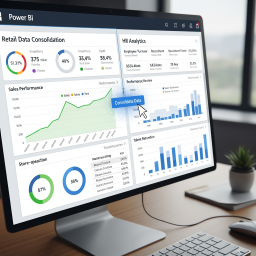
Your Cegid system already holds everything you need to make decisions — you just have to make it talk. Whether you manage a network of stores with Cegid Retail (Y2) or finance and payroll with Cegid XRP, the information is there — just scattered across stores, fiscal years and departments. This course teaches you how to connect Power BI directly to your Cegid database and turn that raw material into clear, consolidated and actionable dashboards — from network revenue all the way to payroll costs, in a single click. The approach is hands-on and grounded in the Tunisian context. You start with the fundamentals: understanding where your data lives in Cegid (SQL Server), connecting to it cleanly, cleaning and modeling with Power Query, then laying out your first indicators in DAX. You then apply these reflexes to your two worlds. On the Retailside, you build the consolidated multi-store view: revenue per m², average basket, conversion rate, network inventory and replenishment, customer segmentation and loyalty. On the HR & Payrollside, you turn Cegid data into a workforce management tool: payroll cost trends, variances, overtime and charges, absenteeism, turnover and social reporting. By the end of the program, you walk away with your own Cegid dashboards, published and viewable on your smartphone in real time, wherever you are. You'll know how to refresh your data automatically, share your reports securely and evolve your models without depending on anyone. Your Cegid data will no longer serve only to print sales receipts and pay slips: it will become the dashboard that lights the way to your company's future. This course doesn't stop at theory: you walk away with ready-to-use deliverables for your business. Your operational dashboards — a multi-store Retail cockpit and an HR & Payroll cockpit, connected to your real Cegid database. Management on the go — your indicators on your smartphone, refreshed in real time, viewable anywhere. A library of DAX measures — the key reusable Retail and HR calculations, ready to adapt to your needs. Complete autonomy — connection, automatic refresh and secure sharing, so you never again depend on a weekly report.

POWER BI and Divalto: Excellence in Industrial Reporting

POWER BI and Divalto: Excellence in Industrial Reporting

Your plant generates a wealth of data every day — production orders, material consumption, machine time, deliveries, purchases. Yet when it comes time to decide...

Your plant generates a wealth of data every day — production orders, material consumption, machine time, deliveries, purchases. Yet when it comes time to decide, you find yourself facing endless PDF listings and Excel exports that are impossible to consolidate. This training gives you the power to turn Divalto, your industrial ERP, into a true visual control tower. You learn to connect Power BI directly to Divalto's SQL Server database and to make your data speak as never before. The approach is decidedly hands-on and true to the realities of Tunisian industry. You begin by understanding the actual structure of Divalto data — its generic tables, its concatenated fields, its business rules — then you build optimized SQL views that clean and restructure the raw data before Power BI, ensuring fast and reliable reports. Next, you build a solid data model (star schema, relationships, calendar), you write your DAX measures, and you design clear, interactive dashboards. Every session is based on real Divalto cases: an indicator designed in class is an indicator you will be able to reproduce on your own data. By the end of the program, you no longer endure your production: you steer it with precision. Planned vs. Actual comparison on your production orders, immediate detection of cost overruns, OTIF service rate by customer or by root cause, trends in purchase prices and supplier ratings — everything becomes readable in just a few seconds. You leave able to publish your reports, secure them, and refresh them automatically, finally giving your executives the concise, modern overview they expect. A training measured in concrete deliverables, directly reusable on your ERP: Your ready-to-use Divalto SQL views — clean, high-performance extractions that decode Divalto tables and respect your business rules (discounts, taxes, cost price). A complete industrial dashboard — production order monitoring, OTIF service rate, and purchasing analysis, assembled and operational by the end of the program. A library of DAX measures — the key calculations (variances, margins, rates, running totals) documented so you can adapt them to your own indicators. The support of BSF expertise — the know-how of a team that knows Divalto inside out, to clear technical pitfalls without wasting time.

POWER BI and Odoo: Turning PostgreSQL Data into Strategy

POWER BI and Odoo: Turning PostgreSQL Data into Strategy

Your Odoo captures everything: every quote, every stock movement, every accounting entry, every time log. A rare and rich trove of operational data — and yet, w...

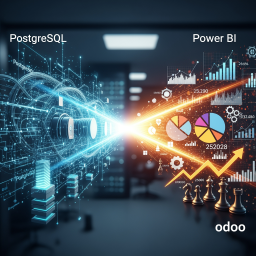
Your Odoo captures everything: every quote, every stock movement, every accounting entry, every time log. A rare and rich trove of operational data — and yet, when the time comes to present a clear metric to your steering committee, the native dashboards quickly show their limits. This training teaches you to unlock that data: connecting Power BI directly to Odoo's PostgreSQL database and turning daily data entry into genuine strategic steering. You no longer have to put up with static Excel exports — you query millions of rows in real time. The approach is decidedly hands-on and technical. You first demystify Odoo's data model — its tables sale_order, account_move, stock_quant, its relational fields and its analytic accounting — so you know exactly where each figure lives. You then master the two connection strategies depending on your hosting: direct PostgreSQL access via port 5432 for Odoo On-Premise and Odoo.sh, the most performant; and the workaround through the XML-RPC API or an intermediate Data Warehouse for Odoo Online (SaaS), where the database is locked down. Then you structure the data with Power Query, build a robust star schema and write your measures in DAX. By the end of the course, you build with your own hands the three dashboard families that matter: sales analysis (CRM conversion, average basket, seasonality), financial steering (dynamic income statement by cost center, customer and supplier due dates) and the supply chain (stock valuation at weighted average cost, turnover, real margins after logistics costs). You walk away with a complete BI solution, automatically refreshed and secured, plugged into your Odoo — capable of moving from simple tracking to informed steering of the entire company. Far more than theoretical knowledge: operational deliverables, ready to use the moment you get back to the office. Your three dashboards — Sales, Financial and Supply Chain, built on your own Odoo data and immediately reusable. Your map of the Odoo model — a reference of the key tables and relationships so you never get lost in the PostgreSQL schema. A library of DAX measures — sales, financial and logistics KPIs ready to copy into your future reports. A refresh architecture — secure connection and automatic refresh, for dashboards that always stay up to date with no manual intervention.

POWER BI and SAP Business One (S1): BI for Growing SMEs

POWER BI and SAP Business One (S1): BI for Growing SMEs

Your SME chose SAP Business One to support its growth, and your data piles up there day after day: sales, purchases, inventory, payments received. Yet when it c...

Your SME chose SAP Business One to support its growth, and your data piles up there day after day: sales, purchases, inventory, payments received. Yet when it comes time to steer the business, you run into rigid Crystal Reports and endless Query Manager queries that "speak accountant" when what you need is to make decisions. This training gives you the power to turn that reservoir of data into clear, living, actionable dashboards — with Power BI, the analytics tool your SAP B1 was missing. The approach is firmly hands-on and business-oriented. First, you learn to tame the real data model of SAP Business One — those famous OINV, ORDR, OITM, OCRD tables you'll run into constantly — then to connect Power BI to it cleanly, whether your database runs on SQL Server or SAP HANA. Next, you structure your data into a solid model (relationships, DAX measures, dates), before building your three strategic dashboards: sales management (who buys what, which customers are at risk of leaving), purchasing analysis (supplier prices, on-time delivery) and cash flow tracking (projecting cash flow from your actual orders and invoices). By the end of the program, you no longer endure reporting: you master it. You leave with operational SAP B1 dashboards, indicators that finally speak the language of executives, and the independence to evolve them at the pace of your business. You steer your growth with the same analytical weapons as large companies — without their budget or their complexity. Your ERP finally becomes readable, and your decisions, grounded in facts. This training is not theoretical: it leaves you with deliverables ready to plug into your SAP Business One. Three operational dashboards — Sales, Purchasing and Cash Flow, connected to your real SAP B1 data. A reusable data model — relationships, DAX measures and a date table, ready to host your next analyses. A map of the SAP B1 tables — a cheat sheet of the key tables and fields (OINV, ORDR, OITM, OCRD…) so you're never lost in the database again. Independence — the ability to refresh, share and evolve your reports without depending on a developer.

POWER BI and NAVISION (Dynamics): Microsoft's winning duo

POWER BI and NAVISION (Dynamics): Microsoft's winning duo

You use Microsoft Dynamics NAV (Navision) or Business Central, and every day your ERP records a gold mine: sales, purchases, inventory, receivables, production ...

You use Microsoft Dynamics NAV (Navision) or Business Central, and every day your ERP records a gold mine: sales, purchases, inventory, receivables, production orders. Yet this wealth often remains locked away in austere, rigid RDLC reports that you cannot explore freely. This training gives you the power to unlock your data and steer your business with complete autonomy — because NAV and Power BI belong to the same Microsoft family, and their integration is quite simply the most natural on the market. The approach is hands-on and business-oriented. You first learn to connect Power BI to Navision cleanly — via OData or through direct SQL access — then to transform and model your tables (customers, items, accounting entries, sales lines) to obtain a reliable, high-performance model. You then master the DAX language to create your own indicators: revenue, margin, DSO, stockout rate, production yield. No more waiting for a costly custom development to add a column to a report: you build interactive dashboards yourself where your sales, finance, and logistics directors find their answers in a single click. By the end of the program, you walk away with operational dashboards plugged into your real data: a dynamic aged balance and DSO tracking, inventory management with stockout and overstock detection, production and material consumption monitoring, profitability analysis by item and by family. You will know how to publish, share, and refresh them automatically. It is the essential tool to modernize the way you run your SME — without changing ERP, and by giving autonomy back to your teams. Far more than a theoretical course: ready-to-use deliverables and BSF's expertise on the Navision connector. Your dashboards plugged into NAV — sales, finance, inventory, and production, connected via OData or SQL and refreshed automatically. A library of reusable DAX measures — revenue, margin, DSO, aged balance, stockout rate, ready to adapt to your needs. Autonomy for your teams — no more need for custom development to evolve a report. BSF support — the best practices of a partner seasoned in Power BI & Dynamics integration.

POWER BI and SAP S/4HANA: Harnessing the Power of In-Memory

POWER BI and SAP S/4HANA: Harnessing the Power of In-Memory

Your company runs on SAP S/4HANA, the finest of modern ERPs, powered by an "In-Memory" database capable of scanning millions of entries in a fraction of a secon...

Your company runs on SAP S/4HANA, the finest of modern ERPs, powered by an "In-Memory" database capable of scanning millions of entries in a fraction of a second. Yet this power often remains locked away: standard Fiori reports handle operational work very well, but never give decision-makers the flexibility of cross-functional strategic analysis. This course teaches you how to unlock S/4 data and place it, alive and readable, into the hands of those who steer the business. The approach is hands-on and true to the reality of an SAP project. You will learn how to bypass the complexity of the technical tables — starting with the famous universal table ACDOCA — to connect directly to CDS (Core Data Services) views through the certified SAP HANA connectors. All the business logic defined in SAP is thus preserved: no calculation rule to recreate in Power BI. You will then choose between the two strategies that can make or break a business intelligence project — DirectQuery mode for critical real time, Import mode for ultra-fast multi-year histories — and you will build a robust data model, sound DAX measures, and visuals that speak. By the end of the program, you will walk away with real financial dashboards (P&L, Balance Sheet) and logistics dashboards that leverage HANA's speed to deliver a smooth experience, even on massive volumes. You will know how to secure access by profile, publish to the Power BI service, and industrialize the refresh. In short, you will become the bridge between the richness of the SAP system and the intelligence of decisions — the skill every S/4HANA organization is looking for. Far more than theoretical knowledge: deliverables ready to plug into your own system. Operational dashboards — a P&L, a Balance Sheet, and a logistics dashboard as templates, fed by CDS views, which you adapt to your own environment. A proven connection method — the right HANA connector, the right mode (DirectQuery vs Import), and a clean data model, documented step by step. A library of DAX measures — the essential financial and logistics KPIs, reusable across all your future reports. BSF support — our best practices in governance, security, and performance, drawn from real S/4HANA projects.

POWER BI for SAP: Unlock Your Data and Democratize Access to Information

POWER BI for SAP: Unlock Your Data and Democratize Access to Information

Your company runs on SAP, the world's leading ERP: rigorous, robust, capable of handling the most massive processes. But how many times have you waited days for...

Your company runs on SAP, the world's leading ERP: rigorous, robust, capable of handling the most massive processes. But how many times have you waited days for a simple report, dependent on the IT department for the slightest custom view? This training frees you from that dependency. You learn to connect Power BI to your SAP environment — HANA or ECC — to transform data locked in transactions into living, interactive dashboards accessible to everyone. You move from "IT reporting" to self-service BI, and you are the one who takes back control of your information. The approach is concrete and resolutely business-focused. You begin by understanding SAP's data architecture — modules, tables, HANA models — then you establish the connection through certified connectors and the data gateway, ensuring security and performance. You then model your data cleanly (star schema, relationships, DAX), you cross-reference SAP with your other sources — CRM, Excel budget files, market data — and you design clear dashboards that your sales directors, management controllers, and logistics managers will use every day. Not a single line of ABAP: only the familiar ergonomics of Microsoft and the power of SAP brought together. By the end of the program, you know how to build a complete decision-making chain, from SAP extraction all the way to secure publication on the Power BI service, with automatic refresh and controlled sharing. You will have reduced your dependence on legacy reporting tools, accelerated adoption by business teams, and given your organization a true culture of data-driven management. With BSF, you bring together the rigor of SAP and the agility of Power BI — for a company finally driven by information rather than held back by it. A directly operational skill, ready to put to use the very next day in your SAP environment: A mastered SAP↔Power BI connection — certified connectors, data gateway, and automatic refresh configured and understood. Your own dashboards — sales, finance, and logistics reports built on your real data, usable immediately. Business team autonomy — the ability to answer your own questions yourself, without reopening a ticket with IT. Governance best practices — row-level security (RLS), access management, and performance to deploy at scale with confidence.

POWER BI for SAGE X3: Mastering Industrial and Multi-Site Complexity

POWER BI for SAGE X3: Mastering Industrial and Multi-Site Complexity

You run an industrial or trading group on Sage X3, and you know it: this ERP's functional richness has a downside. Standard reports are rigid, multi-company con...

You run an industrial or trading group on Sage X3, and you know it: this ERP's functional richness has a downside. Standard reports are rigid, multi-company consolidations take days, and your executive committee expects a synthetic view that X3 struggles to deliver on its own. This training gives you the power to position Power BI as an agile intelligence layer on top of X3's robustness — and to finally turn your data reserve into dashboards that drive decisions. The approach is hands-on and field-oriented. You first learn to connect Power BI to X3 without ever slowing down production, by structuring a true Data Warehouse. You then build a model that aggregates the heterogeneous — multi-company, multi-site, multi-currency — to see the group's performance at a glance, while keeping the ability to drill down to the order line or the manufacturing order. No more waiting for manual consolidations: you get the consolidated figure in real time, and you know where it comes from. You finally ramp up where the X3 / Power BI pairing excels: the Supply Chain and industry. Inventory turnover and the hunt for dormant stock, real-time OTIF customer service rate, production efficiency (OEE) tied to commercial targets. By the end of the program, you walk away with operational dashboards connected to your own X3 data — a decision-making asset you'll know how to maintain, secure, and share across your entire management team. This training is not theoretical: it leaves you with deliverables you can put to use the very next day. A sound connection architecture — an X3 to Data Warehouse to Power BI design that queries your data without weighing on operations. A consolidated data model — multi-company, multi-site, and multi-currency, ready to host your KPIs in DAX. Your business dashboards — consolidated Finance, Supply Chain (OTIF, dormant stock), and Production (OEE) connected to your real data. BSF support — best practices for refresh, security, and distribution to sustain your decision-making framework.

POWER BI for SAGE 100: From Excel Export to Dynamic Steering

POWER BI for SAGE 100: From Excel Export to Dynamic Steering

You know this month-end ritual: exporting the aged trial balance from Sage 100 to Excel, reworking CSV files by hand, rebuilding pivot tables, and fixing broken...

You know this month-end ritual: exporting the aged trial balance from Sage 100 to Excel, reworking CSV files by hand, rebuilding pivot tables, and fixing broken formulas — only for the number to be out of date by the time it's ready. This training puts an end to that waste. You'll learn to connect Power BI directly to Sage 100 and turn your ERP, which already runs your accounting and sales management, into a true decision-making instrument: reliable, automated, and viewable from your phone. The approach is hands-on and built for the Tunisian SME. You start from what you already do — the Excel export — to understand its limits, then you scale up: connecting to Sage data, cleaning and transforming with Power Query, building a model that finally cross-references accounting and sales, and writing your first indicators in DAX (revenue, margin, year-over-year comparison in Year-to-Date and Month-to-Date). No more silos: you analyze your margin by product, by customer, or by sales rep without waiting for the period close. Then you design clear dashboards — forecast cash flow based on actual due dates, an overdue-payments map with visual alerts, working capital tracking — and you automate their refresh. By the end of the program, you walk away with an operational dashboard connected to your own Sage 100 data, able to update itself and give you immediate visibility into daily revenue, upcoming collections, and the company's financial health. You'll no longer be at the mercy of your data: you'll steer it. This is the move from artisanal reporting to dynamic steering — the moment your numbers finally start working for you. Not just concepts: deliverables ready to use in your company first thing Monday morning. A dashboard connected to your data — connected to your Sage 100, with your real revenue, margins, and cash flow. A reusable data model — Power Query queries and DAX measures you can duplicate and adapt at will. Automatic refresh — your reports update on their own, shared and accessible on mobile. Complete autonomy — the method to build your own business indicators, without depending on anyone.

Automating Profitability Metrics: From "Revenue" to "Real Margin"

Automating Profitability Metrics: From "Revenue" to "Real Margin"

Revenue flatters, but it's the margin that pays the salaries. Too many companies steer with their eyes fixed on sales and only discover their real profitability...

Revenue flatters, but it's the margin that pays the salaries. Too many companies steer with their eyes fixed on sales and only discover their real profitability once a year, at the balance sheet — far too late to turn around a product that's sinking or a project that's slipping. This training teaches you to reverse the logic: calculate the margin, day after day, line by line, automatically. You stop believing you're making money — you know it, with the numbers to prove it. The approach is concrete, grounded in BSF's dual expertise in management control and business intelligence. You begin by laying the foundations: distinguishing direct from indirect costs, gross margin from net margin, and understanding why revenue alone misleads you. You then learn to automate cost allocation to obtain real profitability by product, by client and by project — by connecting your invoicing, purchasing and time-tracking data. Then you build the living dashboards that truly matter: a break-even point tracked every morning, real-time margin, and automatic detection of hidden costs — off-process discounts, unbilled logistics fees, returns that eat into profit. By the end of the program, you walk away with an automated, reliable margin-based management system, and the decision-making instincts that come with it. You'll know how to spot a loss-making product before it drags down the year, defend a price increase on indisputable data, renegotiate with a supplier evidence in hand, and present quantified profitability to your bank or a partner. Margin stops being an annual mystery and becomes your daily compass — the only guarantee of your company's long-term survival. Your profitability deserves professional tools. BSF supports you well beyond the training: Your margin dashboard, free of charge — we build, free of charge, a profitability cockpit for every registered company: margin by product, break-even point and alerts included. Your costs connected and automated — invoicing, purchasing and time-tracking connected into a unified margin calculation, in real time, ready to steer by the end of the program. Full integration available — for the most ambitious projects, BSF can take on the end-to-end integration of your margin-based management, giving you a professional tool without adding to your internal workload.

Fundraising: How to Prepare a Compelling Investor Pitch

Fundraising: How to Prepare a Compelling Investor Pitch

You're leading a project, and you know that at some point, you'll need to convince investors to believe in you as much as you believe in yourself. Raising funds...

You're leading a project, and you know that at some point, you'll need to convince investors to believe in you as much as you believe in yourself. Raising funds is not a matter of luck or connections: it's a skill that is prepared, structured, and mastered. This program teaches you to build, piece by piece, an investment pitch that inspires confidence — a clear vision, solid numbers, a compelling pitch — to turn a simple meeting into a real funding opportunity. The approach is hands-on and results-driven. You start from your story and your market, then build the core of the pitch: a Business Plan in which you master every assumption, every cost, and every scenario. You learn to build credible financial projections, to discuss valuation and dilution without apprehension, and to design a visual pitch deck that captures attention in just a few slides. Finally, you understand the investor journey — how much to raise, from whom, and at what stage — to avoid rounds that are too early, too small, or too dilutive. By the end of the program, you walk away with a complete investment pitch, ready to present, and with the confidence of someone who knows how to defend their project before a fund, a business angel, or an investment committee. You'll know how to tell your story, run the numbers, negotiate, and close the deal. Raising funds will no longer be a stressful and opaque ordeal, but a process you lead from a position of strength. Your project deserves the best tools to win people over. BSF Startup Lab supports you well beyond the program: Your pitch prepared free of charge — for every enrolled founder, we prepare the Business Plan, the Pitch Deck, and the complete investor pitch. Startup Lab by your side — for the most promising projects, Startup Lab can become a minority investor and align its interests with yours. Strategic support — you gain credibility, speed, and appeal in the eyes of serious investors.

Structuring Your Operations: Process, Teams, and Minimalist Organization

Structuring Your Operations: Process, Teams, and Minimalist Organization

You have a startup to get off the ground — and you can already feel the energy scattering in every direction: overlapping tasks, delayed decisions, things slipp...

You have a startup to get off the ground — and you can already feel the energy scattering in every direction: overlapping tasks, delayed decisions, things slipping through the cracks. The truth is that a young company can't afford to grow complex. Its strength lies in moving fast, keeping things simple, and staying focused on its core value. This program teaches you to build a minimalist, clear, and agile operational organization — one that makes you more efficient from day one, without ever weighing down your structure. The approach is firmly hands-on. You start by mapping your essential processes — acquisition, delivery, customer service, billing, follow-up — to document them simply and execute them consistently. You then distribute roles without creating heavy hierarchies: complementary, flexible roles, aligned with current priorities, formalized in a lightweight org chart and clear role descriptions. Then you set up your dashboard: even with a small team, you steer by the KPIs that truly matter — acquisition cost, conversion rate, customer satisfaction, lead times, margins — to adjust your strategy in real time. By the end of the program, you walk away with an operational machine that runs: written processes, an aligned team, tracked metrics, and smooth internal communication — short meetings, collaborative tools, fast decisions. Structuring your operations isn't about adding bulk: it's about creating the foundations of a startup that can grow without collapsing under its own weight. You'll no longer be at the mercy of your day-to-day: you'll be steering it. This program doesn't leave you alone with the theory. BSF Startup Lab puts its structuring expertise to work for your project: Operational structuring included — your processes, your org chart, and your role descriptions are set up for you, included for project leaders enrolled in the program. Possible co-support — for innovative projects, Startup Lab can co-lead the implementation in exchange for equity, allowing you to cut your most critical costs. Foundations ready to grow — you leave the program with a truly operational organization, not a binder full of good intentions.

Go-To-Market Strategy: Planning a Successful Launch

Go-To-Market Strategy: Planning a Successful Launch

You've built a product you care deeply about — but building and launching are two different jobs. Too many founders spend months building, only to watch their l...

You've built a product you care deeply about — but building and launching are two different jobs. Too many founders spend months building, only to watch their launch go unnoticed for lack of a market entry strategy. This training teaches you to design a clear, actionable Go-To-Market (GTM) plan: how to enter your market, reach your first customers, build traction, and validate your model, even on a tight budget. The approach is concrete and results-driven. You start by choosing the right target segment — narrow but relevant, where the customer's pain is strong and where you can test quickly. You then clarify your launch message: key problem, core benefit, differentiation, and reason to believe, stated simply and with impact. You select your high-yield channels — social media, events, partnerships, email, platforms, direct sales — and orchestrate it all into an operational plan: timeline, communication sequence, measurable goals, and tracking of user feedback. By the end of the program, you walk away with a complete, ready-to-execute Go-To-Market plan, and with the method to launch any future product with confidence. A strong GTM turns a product into real traction: it's the moment your idea meets the reality of the market — and where your business takes off. Your launch deserves more than a plan on paper. As part of the BSF Startup Lab, your project gets a real boost: Your Go-To-Market plan, free — the GTM plan is built free of charge as part of a Startup Lab program. Possible co-support — for ambitious projects, Startup Lab can co-pilot the launch in exchange for a small equity stake. A reusable method — a GTM framework you'll apply to every new product, market, or iteration.

Branding & Positioning: Building an Identity That Inspires Trust

Branding & Positioning: Building an Identity That Inspires Trust

Your product is good — but in a saturated market, that's no longer enough. What makes a customer choose you, trust you, and stay is your brand. Not just your lo...

Your product is good — but in a saturated market, that's no longer enough. What makes a customer choose you, trust you, and stay is your brand. Not just your logo: the promise you carry, the place you occupy in people's minds, the emotion your name triggers. In this program, you'll learn to build a brand identity that inspires trust, justifies your price, and makes you memorable — from strategic positioning all the way to the colors, tone, and experience your customers live. The approach is hands-on and starts at the root: positioning. You'll clarify what you truly deliver, to whom, and why you're different — until you can craft the sentence that answers the only question that matters: why you rather than someone else? You'll then build your brand platform (mission, values, personality), your visual identity (name, logo, colors, typography, graphic world), and your voice (tone, benefit-driven messaging, storytelling). Every building block will reflect your promise, instead of styles chosen at random. In the end, you walk away with a brand that's consistent from first contact through after-sales: a style guide that holds up, a key message that lands, and an experience — website, support, onboarding, internal culture — that carries the promise everywhere. A startup without branding stays invisible. With strong branding, it becomes essential. You'll know how to build yours, and bring it to life. Beyond the skills, BSF Startup Lab gives project founders a real boost: Your branding, on the house — your branding style guide, positioning, key message, and visual elements are provided free of charge when you join a training program. Possible funding — for high-potential projects, Startup Lab can fund the branding work in exchange for a symbolic equity stake. A ready-to-use brand — you leave with a complete, consistent identity, ready to deploy immediately across your channels.

Drafting Bylaws & Legal Formalities: Launch Your Company Without Stress

Drafting Bylaws & Legal Formalities: Launch Your Company Without Stress

You have a project, a vision, perhaps even customers already — and only one thing is missing for you to truly exist: a company. But between choosing the legal f...

You have a project, a vision, perhaps even customers already — and only one thing is missing for you to truly exist: a company. But between choosing the legal form, drafting the bylaws, the capital, the allocation of shares, and the registration procedures, many founders pull back, paralyzed by the fear of making a mistake. This program is designed to lift that block: you understand every decision, you draft your own bylaws with full awareness, and you launch your company with peace of mind, without being subjected to jargon or guesswork. The approach is concrete and action-oriented. You learn to choose the right legal form for your situation (sole proprietorship, SARL, SUARL, SA, certified startup), to set your capital, and to allocate shares without sowing the conflicts of tomorrow. You then break down each clause of the bylaws — corporate purpose, management, powers, voting rules, entry and exit of partners, dissolution — to build a solid framework true to your long-term vision. Then you move through the actual formalities: registration, entry in the trade register, tax identification number, publication, accounts, and start-up obligations. By the end of the program, you walk away with your bylaws ready to sign, a clear roadmap of all the procedures, and the confidence of a founder who has mastered their legal setup. A well-formed company is a secure company: from the very start, you lay healthy foundations capable of supporting growth, the arrival of partners or investors, and your peace of mind as an entrepreneur in your day-to-day. Beyond knowledge, BSF Startup Lab supports you concretely in launching your company: Your bylaws drafted free of charge — when you enroll in a training program, your legal bylaws are drafted at no cost so you start off on the right foot. Reduced legal fees — in some cases, Startup Lab can replace legal fees with a symbolic equity stake, lowering your costs and aligning interests. A toolkit of templates — bylaw templates, a checklist of procedures, and standard documents ready to adapt to your project. A stress-free launch — a step-by-step guide, from the first decision through to your company officially registered.

Analyzing Startup Profitability: Tools, Margins and Critical Thresholds

Analyzing Startup Profitability: Tools, Margins and Critical Thresholds

Your startup is growing, your revenue is rising — and yet, do you really know whether it's making money? Many founders fly blind, dazzled by growth and obliviou...

Your startup is growing, your revenue is rising — and yet, do you really know whether it's making money? Many founders fly blind, dazzled by growth and oblivious to actual profitability. This training gives you the financial clarity that separates ventures that last from those that collapse: you'll learn to break down your costs, calculate your true margins, find your break-even point and finally understand whether each sale earns you money or costs you. The approach is concrete and data-driven. You start from the cost structure — fixed, variable, direct, indirect — to identify the items that weigh most heavily. You then calculate your gross, operating and net margins, and you uncover the hidden costs that turn a best-selling product into a financial sinkhole: storage, support, acquisition, returns, maintenance. You'll master the break-even point, the break-even threshold and the contribution margin, then the decisive pairing of any startup — customer acquisition cost (CAC) versus customer lifetime value (LTV) — to know whether your model can, or cannot, become profitable. By the end of the program, you'll walk away with your own dashboards — a profitability model, a break-even calculation, projections and management indicators tailored to your business. You'll know how to read your numbers, anticipate risks, defend your profitability before an investor and make your sales and marketing decisions based on data, never again on gut instinct. Analyzing your profitability isn't an accounting chore: it's the weapon that secures your business model and builds a solid company. Beyond the skills, BSF Startup Lab puts its expertise at the service of your project: A complimentary profitability analysis — for projects enrolled in our programs, we carry out a complete analysis free of charge: margins, thresholds and projections. Your management tools — a margin model, break-even calculation and dashboard ready to use for your business. Possible ongoing support — when the project is serious and strategic, we can support the founder in exchange for a small percentage of equity, offering expertise that would normally be very costly.

Build an Irresistible Value Proposition

Build an Irresistible Value Proposition

You have an idea, a product, a drive to start a business — but when someone asks you why a customer should choose you, the answer stays vague, too long, or stuf...

You have an idea, a product, a drive to start a business — but when someone asks you why a customer should choose you, the answer stays vague, too long, or stuffed with features. That's the trap this course teaches you to avoid. A value proposition is neither a slogan, nor a list of options, nor a sales pitch: it's the deep promise that explains, in one crystal-clear sentence, why your solution deserves to exist. Mastering it means selling faster, being understood immediately, and convincing customers and partners alike. The approach is hands-on and grounded in the field. You start by digging into the problem — because the more frequent, costly, or frustrating a pain is, the more valuable your solution becomes: you learn to name the emotion, the unmet need, the real gap your customer experiences. Next, you build your differentiation (speed, simplicity, price, technology, experience, business model) to position yourself even in a saturated market, then you make your promise measurable : time saved, costs reduced, revenue increased, quality improved. Because customers love numbers, you walk away with proof, not adjectives. By the end of the program, you will have written, tested on real prospects, and sharpened your value proposition — ready to lead your pitch, your website, and your sales brochure. Beyond a marketing message, you hold the foundation of the entire business: what your offer, your price, and your strategy rest on. An irresistible value proposition isn't invented in a meeting; it's built, method after method — and that's exactly what you'll take away. BSF Startup Lab doesn't leave you with just notes: you walk away equipped, and supported beyond the course. Your final document, free of charge — a written, ready-to-use value proposition, provided free as soon as you join a program. Workshops and real-world cases — concrete examples and field tests to validate your promise with real customers. A partner for innovative projects — for the most promising ideas, Startup Lab can take part in the project by acquiring a small equity stake, thereby reducing your overall launch cost.

Artificial Intelligence in Business: Automate, Analyze, Decide Better

Artificial Intelligence in Business: Automate, Analyze, Decide Better

Artificial intelligence is no longer a distant promise: it is already at work in the companies that have learned to harness it. This training teaches you to put...

Artificial intelligence is no longer a distant promise: it is already at work in the companies that have learned to harness it. This training teaches you to put it to work for yours — not to follow a trend, but to automate what wastes your time, read your data like a strategic map, and decide faster and more accurately. You don't need to be an engineer: you learn to drive AI as a decision-maker, to know what it can do, what it cannot do, and where it truly creates value. The approach is concrete and results-oriented. You start from real cases in your own business — data entry, follow-ups, document sorting, classification, reporting — to automate repetitive tasks and free up your teams. You then discover how to turn data into anticipation: forecasting sales, detecting customer risks, anticipating demand, spotting a breakdown before it happens. At every step, you connect the technology to an operational decision, because a useful AI is an AI that changes what you do Monday morning. But succeeding with AI isn't just about choosing a tool: it means integrating it into your systems, governing your data, training your teams, and building trust. So you also learn to scope a project, protect confidentiality, keep humans in the loop, and deploy an AI that is ethical and adopted. By the end of the journey, you leave with a clear roadmap, prioritized and quantified use cases, and the ability to turn AI into a lasting competitive advantage — precision, intelligence, and speed in service of your decisions. This training doesn't stop at theory: it puts in your hands what you need to act the very next day. Your AI roadmap — a mapping of your priority use cases, quantified and ranked by impact and feasibility. Ready-to-use automations — concrete workflows for your repetitive tasks, tested on your own data. A predictive dashboard — an analysis model to anticipate sales, risks, or demand, readable by your teams. A governance charter — the usage, security, and ethics rules to deploy AI with confidence across your organization.

Expansion & Export Strategy: Preparing for Growth

Expansion & Export Strategy: Preparing for Growth

Your company has found its place in its market — and now the horizon is widening. New countries, new customers, growth that no longer plays out at home alone. B...

Your company has found its place in its market — and now the horizon is widening. New countries, new customers, growth that no longer plays out at home alone. But expanding internationally is not a stroke of luck: it's a strategy that must be built. This program equips you to turn the desire to export into a solid, methodical, and profitable plan, where every target market is chosen, prepared, and won with clear-eyed judgment. The approach is concrete and progressive. You first learn to diagnose your real capacity to export, then to select the most promising markets through a rigorous analysis of demand, competition, and positioning. Next you master the essential mechanics — regulations, standards, certificates, incoterms, logistics, customs, insurance — before choosing your market entry model: distributor, agent, franchise, direct sales, platform, or partnership. You adapt your offer to local expectations, you secure your margins and your currency risks, and you build a steering system that sustains your presence well beyond the first orders. By the end of the journey, you walk away with your own expansion roadmap: prioritized markets, a settled entry mode, a logistics and regulatory plan, a pricing and risk policy, and indicators to steer by. You will no longer be subject to international markets — you will decide them. Because preparing for expansion means securing growth and opening up, step by step, new and lasting horizons. A results-driven program: you leave not with notes, but with a strategy ready to execute. Your market selection matrix — a short-list of target countries ranked by your potential and your capabilities. Your entry and compliance plan — chosen distribution model, regulatory requirements, and a costed logistics framework. Your export dashboard — pricing policy, risk coverage, and indicators to steer and adjust your growth.

Professional Communication Coaching: Enhancing Impact & Clarity

Professional Communication Coaching: Enhancing Impact & Clarity

You have ideas, expertise, a vision — but sometimes you feel that your message gets diluted, that people listen to you without truly following you, or that a di...

You have ideas, expertise, a vision — but sometimes you feel that your message gets diluted, that people listen to you without truly following you, or that a difficult conversation slips away from you. This coaching is made for you. In it, you work on what changes everything in professional life: being understood the first time, leaving a lasting impression, and giving each of your contributions the weight it deserves. Communication is not a gift reserved for a few — it is a skill that you build, and you are going to build it. The approach is concrete and tailored to you. You first learn to clarify your thinking and get to the point: a clear intention, a key message, arguments that land. You then work on your impact — voice, pace, posture, eye contact — to embody what you say with confidence and credibility. Then you tackle real-world situations: announcing a sensitive decision, giving feedback that helps people grow, defusing a conflict, negotiating without a power struggle. You also refine your written communication — emails, reports, presentations — and you develop active listening, because persuading always begins with understanding. By the end of the program, you communicate with clarity, conciseness and presence, in meetings as well as one-on-one, both verbally and in writing. You know how to structure an idea in just a few seconds, adjust your style to the person you're speaking with, and handle the most delicate exchanges with firmness and respect. Communicating better is not only about speaking better: it strengthens your leadership, your relationships and your influence every day. And once acquired, that assurance never leaves you. This coaching goes beyond advice: it leaves you with lasting takeaways that you can use the very next day. Your personal toolkit — your speaking frameworks, your feedback templates and your writing models, ready to reuse. A diagnosis of your style — your strengths identified and a clear improvement plan, tailored to your real-life situations. Filmed practice — role-plays replayed and analyzed to measure your progress, session after session. Lasting confidence — the confidence to handle any conversation, from the team briefing to the high-pressure interview.

Implementing a Quality System: Standardize to Perform Better

Implementing a Quality System: Standardize to Perform Better

You know the feeling: everyone works their own way, the same mistakes keep coming back, customer complaints pile up, and no one really knows "how we're supposed...

You know the feeling: everyone works their own way, the same mistakes keep coming back, customer complaints pile up, and no one really knows "how we're supposed to do things." A high-performing quality system puts an end to this chaos. It's not about stacking up procedures to satisfy an auditor, but about building a stable, repeatable, and controlled way of operating, where quality becomes a shared culture rather than an isolated department. In this training, you learn to design this system from A to Z, and to keep it alive. The approach is decidedly hands-on and grounded in the field. You start by laying the foundations — standardizing methods, defining compliance criteria, and mastering simple, useful documentation that lightens the load instead of adding to it. You then move on to proactive quality: anticipating failures through risk analysis, assessing their criticality, and building mitigation plans before problems arise. Finally, you bring the system to life — internal audits, process reviews, quality committees, communication — and you steer it with indicators that point to the right priorities. At the end of the program, you don't walk away with one more theory, but with your own quality architecture: standards, process mapping, document control plan, risk analysis, and an indicator dashboard. You'll know how to deploy a reliable, robust, traceable, and scalable system, capable of supporting your company's growth and transformations. Standardize to perform better: that means giving your organization an excellent, sustainable way of operating built on continuous improvement. Far more than a certificate: a toolkit ready to deploy in your organization by Monday morning. Your key standards and procedures — simple, reusable templates calibrated to your own business processes. Your risk analysis — a criticality assessment grid and ready-to-use mitigation plans. Your quality dashboard — the essential indicators (non-conformities, complaints, cost of poor quality) to steer and prioritize. An internal audit plan — the method to keep your system alive, dynamic, and continuously improving.

Managing Complex Projects: Methods, Tools, and Execution

Managing Complex Projects: Methods, Tools, and Execution

You have a major project ahead of you — a technology rollout, a cross-functional initiative, a reorganization, a launch. You know it concentrates the risks, the...

You have a major project ahead of you — a technology rollout, a cross-functional initiative, a reorganization, a launch. You know it concentrates the risks, the costs, the dependencies, and the human stakes, and that it can either propel the company forward or derail without warning. This training gives you what makes the difference between a project that drifts and a project that delivers: a clear method, solid governance, and an execution capability that turns ambition into concrete results. The approach is hands-on and follows the real life cycle of a project. You start with scoping — answering What, Why, How, and With whom without ambiguity — so you never again launch a project on shaky foundations. You then build your steering framework: breakdown into phases, validated milestones, committees, workload plan, and budget. You learn to combine agility and planning without falling into either the rigidity that blocks or the vagueness that breeds chaos. Then you move into execution: anticipating roadblocks, deciding quickly, managing risks and conflicts, and setting the pace. Finally, you close out cleanly to capture lessons learned and instill a true project culture. By the end of the program, you don't walk away with theory: you walk away with the complete project manager's kit — scoping document, schedule, risk register, dashboard, and responsibility matrix — applied to a real project, your own. You'll know how to run a committee, defend a trade-off, get a drifting project back on track, and rally a cross-functional team behind a shared goal. Because managing a complex project isn't about doing everything yourself: it's about mastering the framework, the method, the tools, the people, and the execution to lead others toward the result. This training is built to be put to use first thing Monday morning. You walk away with ready-to-use deliverables: A complete toolkit — templates for the scoping document, schedule, risk register, RACI matrix, and dashboard, reusable across all your projects. Your own real project, scoped — you apply every step to a project that matters to you, and walk away with its steering file ready to launch. The project manager's instincts — knowing how to scope, make trade-offs, anticipate a risk, and get a drifting project back on track, under pressure and on schedule. The project manager's mindset — the leadership, stakeholder alignment, and change management that get a team on board.

Cost Analysis & Budgeting: Building a Business You Control

Cost Analysis & Budgeting: Building a Business You Control

A business that doesn't know its costs is flying blind. This program teaches you to take back control of your numbers: understand where every dinar goes, distin...

A business that doesn't know its costs is flying blind. This program teaches you to take back control of your numbers: understand where every dinar goes, distinguish what creates value from what destroys it, and turn your accounting into a true decision-making dashboard. You will no longer be at the mercy of your results — you will steer them. The approach is pragmatic and progressive. You start by breaking down the structure of your costs — fixed, variable, direct, indirect — to calculate a true cost price and know, product by product and customer by customer, where your margin is hiding. You then build a budget that serves as a steering tool, grounded in realistic assumptions and tied to your strategy, before learning the move that makes all the difference: variance analysis, that decision-oriented monthly review that catches drift before it becomes expensive. Finally, you make the leap to modern budgeting: dynamic models, automation, visual dashboards, and rolling forecasts to anticipate rather than merely observe. And because a budget is only worth as much as it is shared, you also leave with the methods to bring your teams on board and make every manager the owner of their numbers. By the end of the journey, you will hold the levers of a business you control — able to decide quickly, grow with confidence, and weather the unexpected. Far more than concepts: a hands-on toolkit, ready to apply Monday morning to your own numbers. Your ready-to-use templates — frameworks for cost-price calculation, budget construction, and variance tracking, adaptable to your business. Your dashboard — a monthly financial cockpit to track costs, margins, and cash flow at a single glance. A repeatable method — a clear budget cycle you can reinstall every year in your organization. The steering instinct — the ability to read your numbers, spot drift, and decide on facts, not intuition.

Team Structuring: Roles, Responsibilities, Performance

Team Structuring: Roles, Responsibilities, Performance

Your company's performance doesn't hinge solely on your product or your market: it hinges first and foremost on how your teams are organized. A well-structured ...

Your company's performance doesn't hinge solely on your product or your market: it hinges first and foremost on how your teams are organized. A well-structured team decides quickly, executes without friction and creates value; an unclear team piles up delays, duplicated work and tension. This training gives you concrete methods to turn a group of people into a team that moves forward — clear on roles, aligned on objectives, smooth in its communication. You start from the ground. You learn to clarify roles and responsibilities so that everyone knows what they have to do and why, to design a hierarchical and functional organization that balances autonomy and oversight, and to set measurable objectives that the whole team understands. You then put in place the rituals and tools that keep information flowing without misunderstandings, and finally you bring in the human dimension — skills, motivations, behaviors — to recruit, support and grow the right people in the right positions. By the end of the program, you don't walk away with theory but with a ready-to-use team structure: a clear org chart, mapped roles, aligned objectives and a communication rhythm that holds up over time. Whether you run an SMB, a department or a project team, you'll know how to diagnose what's slowing your organization down and fix it — for a company that moves fast, without friction. This training is designed to produce deliverables you'll put to use in your company the very next day: An org chart and a map of roles — who does what, who decides, who contributes, with no gray areas or overlap. Job descriptions and a responsibility matrix — clear, current and aligned with the team's mission. A system of objectives and indicators — measurable priorities that everyone understands and owns. A communication and steering plan — meeting rituals, reporting and collaboration tools ready to deploy.

Marketing Strategies & Positioning: Building a Strong Brand

Marketing Strategies & Positioning: Building a Strong Brand

Marketing is not just advertising: it is the art of carving out a clear and lasting place in your customers' minds. A strong brand does not rest on a logo or a ...

Marketing is not just advertising: it is the art of carving out a clear and lasting place in your customers' minds. A strong brand does not rest on a logo or a slogan, but on the sharpness of its promise, the consistency of its experience and the soundness of its strategy. In this course, you learn to build that brand step by step — from the positioning decision all the way to a concrete action plan — so you stop vaguely pleasing everyone and become the obvious choice for those who matter. The approach is pragmatic and grounded in the field. You start with the heart of the matter: defining what you offer, to whom, and why you are different. You analyze your market and your competitors to spot saturated segments, emerging needs and the spaces left to conquer. You then bring your brand to life — visual identity, message, tone, values, personality, the story that builds attachment — and make it consistent across every touchpoint: website, social media, customer service, product, packaging. Finally, you build a strategy that combines acquisition, conversion and retention, and translate it into concrete levers that are tested, measured and adjusted. By the end of the program, you leave with a written positioning, a coherent brand platform and an actionable marketing plan, tailored to your resources and your digital maturity. You will know not only how to attract customers, but how to keep them, turn them into advocates and grow their value over time. A strong brand is a company that knows who it is, what it promises and how it proves it — your most durable competitive advantage. No abstract theory: every session feeds deliverables you can use for your business the very next day. Your positioning statement — a clear, targeted promise: what you offer, to whom, and why you stand out. Your brand platform — identity, message, tone and values, applied consistently across all your channels. Your actionable marketing plan — acquisition, conversion and retention, with the priority levers and a realistic timeline. Your dashboard — the key metrics to track in order to steer, test and adjust your campaigns with data.

Business Creation Support: From Idea to Market Launch

Business Creation Support: From Idea to Market Launch

You have an idea that keeps you up at night — a product, a service, a business you dream of building. But between the idea and the market lies a path full of un...

You have an idea that keeps you up at night — a product, a service, a business you dream of building. But between the idea and the market lies a path full of uncertainties, and most projects don't fail for lack of an idea: they fail for lack of method. This program guides you step by step to turn your intuition into a solid, validated project that's ready to launch. You no longer move forward alone or at random: you follow a structured path, from the first sketch of your idea all the way to your actual entry into the market. The approach is hands-on and applied to YOUR project. You begin by clarifying your idea and crafting a sharp value proposition, rooted in a real need and a defined customer segment. You then conduct genuine market research — demand, competition, trends, pricing, buying behaviors — to make decisions based on facts rather than assumptions. Next, you model your business: revenue, costs, investments, scenarios, and adjustment levers, before building your financial plan — funding plan, cash flow, break-even point, projections. Finally, you set up your operations (organization, processes, tools, legal obligations) and orchestrate your market launch: brand, sales strategy, distribution channels, and acquiring your first customers. By the end of the program, you don't walk away with a mere idea, but with a complete, costed, and defensible business plan — and above all, with the confidence and clarity to take action. Starting a business will no longer be a leap into the unknown: it will be a controlled takeoff, prepared step by step. The project is yours, the decision is yours; we give you the method, the perspective, and the tools to see it through. Far more than a course: a real launch kit, built session after session around your project. Your complete business plan — value proposition, market research, business model, and financial plan brought together and ready to present. Your costed tools — business model, cash flow forecast, and break-even point that you'll be able to read and adjust on your own. Your market launch plan — brand, offer, channels, and first sales actions ready to set in motion. A clear roadmap — the next steps, the legal procedures, and the pitfalls to avoid so you can move forward with confidence.

Operations Digitalization: Becoming the Intelligent Enterprise

Operations Digitalization: Becoming the Intelligent Enterprise

You run a company, a team, or a function, and you feel it every day: tasks keep repeating, information gets lost between tools, decisions arrive too late. Digit...

You run a company, a team, or a function, and you feel it every day: tasks keep repeating, information gets lost between tools, decisions arrive too late. Digitalization is no longer a luxury or a "someday" project — it has become a condition for survival and a tremendous accelerator. This training gives you the power to transform not your software, but the very way you work, decide, and serve, in order to make your organization a truly intelligent enterprise. The approach is hands-on and in the right order. You start where it all truly matters: clarifying and mapping your processes, spotting frictions and roles, because a tool dropped onto disorder only automates the disorder. You then build a coherent ecosystem — ERP, CRM, document management, collaboration, analytics — integrated to break down silos and guarantee a single, reliable version of reality. You automate the repetitive tasks that cost you time and cause errors, you digitalize your customers' experience to anticipate their needs, and you turn data into decisions through dashboards that actually speak. But a successful transformation is first and foremost a human one. You learn to bring your teams on board, to explain rather than impose, and to instill a culture where tools become allies rather than constraints. By the end of the journey, you leave with a digitalization roadmap ready to execute, tailored to your reality — and with the conviction that an intelligent enterprise never considers this work finished: it is a continuous movement of improvement, monitoring, and agility. Because in a world where agility is king, you are the one holding the course. This training does not stop at theory: you come out equipped to take action the very next day. A map of your processes — your key flows mapped, their frictions identified, and their digitalization priorities ranked. Your digital roadmap — a sequenced, realistic, and costed action plan, ready to present and execute within your organization. Your first automations — concrete templates of automated tasks (follow-ups, reporting, archiving) to duplicate immediately. A management dashboard — your essential indicators brought together in a single view to decide on facts rather than impressions.

Setting Up Collections Systems: Sustainably Improving Cash Flow

Setting Up Collections Systems: Sustainably Improving Cash Flow

Your company can post healthy profits and still struggle to breathe: invoices paid late, unpaid bills piling up, cash flow under constant pressure. Profitabilit...

Your company can post healthy profits and still struggle to breathe: invoices paid late, unpaid bills piling up, cash flow under constant pressure. Profitability looks good on paper, but the cash simply isn't coming in. This program gives you the power to turn the situation around — to build, from A to Z, a true collections system that converts your receivables into cash and gives your company back control of its cash flow. The approach is hands-on and immediately actionable. You start by making a clear-eyed diagnosis of your situation: measuring your DSO, your bad-debt rate and the real causes of late payments. You then learn to segment your customers and score them by risk, and to build a structured follow-up process — immediate invoicing, preventive reminders, escalating reminders, escalation and traceability. You equip it all with automation, dashboards and integration with your accounting or your ERP, without forgetting the human factor: aligning sales and finance, and instilling a culture where meeting deadlines is never up for negotiation. By the end of the program, you walk away with an operational collections framework tailored to your company, and with metrics you'll know how to manage month after month. No more late reminders or disputes you simply endure: you anticipate, you get paid faster and you stabilize your finances for the long term. That's what gives a business leader the room to breathe, to invest and to grow with peace of mind — because cash flow under control means the freedom to decide. Not just concepts: deliverables ready to roll out Monday morning. Your written collections procedure — a standardized, step-by-step process, from the invoice to escalation. Your ready-to-use reminder templates — emails, call scripts and escalating letters, adaptable to each customer segment. Your cash dashboard — DSO, aged balance, collection rate and alerts to manage in real time. Your customer scoring grid — to segment risk and adjust payment terms and follow-up strategy.

Executive Coaching: Strengthening Leadership and Decision-Making

Executive Coaching: Strengthening Leadership and Decision-Making

Leading has never been so demanding. Between the strategy to uphold, the teams to unite, constant change, and the pressure of decisions, you carry alone a burde...

Leading has never been so demanding. Between the strategy to uphold, the teams to unite, constant change, and the pressure of decisions, you carry alone a burden that few can measure. This executive coaching is your space to step back, clarify your course, and rediscover the calm of command. Here, we don't apply a ready-made model to you: we start from you — your style, your strengths, your context — to grow the leader you already are. The journey is concrete and personalized. You begin with a clear-eyed assessment: your leadership style, the way you communicate, your relationship to conflict, stress, and listening. You then work on the quality of your decisions — distinguishing the important from the urgent, outsmarting your biases, structuring your thinking, and translating it into clear actions. You strengthen your relational influence to inspire, empower, and create a climate of trust. Then you learn to lead change: giving meaning, anticipating resistance, and establishing a stable framework for execution, even in the storm. By the end of the journey, you decide more soundly, you communicate with greater impact, and you steer your transformations with confidence. You leave with a clear reading of your leadership, tools you'll use every day, and above all a posture: that of a clear-sighted, influential, and serene leader. Because the greatest performance lever for your organization isn't one more tool — it's you, at your full potential. Far more than concepts: lasting reference points to lead differently, from the very first session. Your leader profile — a clear map of your natural strengths and your areas for growth. A decision-making toolkit — prioritization grids, bias detection, and a method to decide soundly, quickly, and without overload. A personalized growth plan — concrete goals and a follow-up framework to anchor your new reflexes. The posture of the serene leader — more clarity, more influence, and a controlled handling of stress and conflict.

Process Optimization: Streamline to Cut Costs

Process Optimization: Streamline to Cut Costs

Your costs are climbing, your lead times are stretching, your teams are running flat out without ever catching up — and yet the actual work accounts for only a ...

Your costs are climbing, your lead times are stretching, your teams are running flat out without ever catching up — and yet the actual work accounts for only a fraction of the time spent. The rest is waiting, duplication, rework, and inherited steps that no one questions anymore. This training gives you the power to finally see your organization as it truly operates, and then to streamline it: doing more, better, and faster, with less. You won't learn one more theory; you'll walk away with a method you can apply to your own processes starting Monday morning. The approach is concrete and step-by-step. You start by mapping the entire chain of one of your processes, from start to finish, to make friction points, bottlenecks, and non-value-added tasks visible. You then learn to hunt down the seven wastes — waiting, overproduction, errors and rework, excess inventory, unnecessary movement, over-processing, and coordination failures — and to eliminate them by simplifying workflows and setting clear standards. You discover which repetitive actions to automate in order to make results reliable and free up time, and how to measure what truly matters so you can steer by the numbers rather than by intuition. But a reinvented process fails without human buy-in. That's why you also learn to bring your teams on board, clarify responsibilities, and establish a continuous-improvement mindset that never stops: measure, adjust, correct, test. By the end of the program, you hold in hand the optimization roadmap for a real process in your business — quantified, prioritized, ready to deploy — along with the ability to repeat the approach on all the others. Optimizing isn't only about cutting costs: it's about giving your company the resilience to last. Not just concepts: deliverables you can use immediately in your organization. The map of your process — one of your real processes fully diagrammed, with its friction points and savings opportunities identified. A quantified, prioritized action plan — your quick wins and your deeper initiatives, ranked by impact and effort, ready to deploy. Your indicator dashboard — the few KPI that truly matter for steering costs, lead times, and quality. A repeatable method — the complete approach to reapply, process after process, on your own.

Profitability Studies: Validating a Project Before Investing

Profitability Studies: Validating a Project Before Investing

You have a project in mind — a new investment, a product, a point of sale, an internal transformation — and one question keeps you from moving forward with conf...

You have a project in mind — a new investment, a product, a point of sale, an internal transformation — and one question keeps you from moving forward with confidence: is it really profitable? Launching a project without a profitability study means navigating blind, and too many companies commit based on a hunch or an unverified promise. This training gives you a rigorous, objective method to answer with hard numbers, before you commit a single dinar. The approach is concrete and hands-on. You first learn to turn an idea into a complete business model: potential revenue, cost structure, investments, future expenses, seasonality — all broken down into three scenarios: optimistic, realistic and pessimistic. You then carry out a real market analysis (size, competition, pricing, trends, barriers) to calibrate your assumptions against reality, and you go on to master the indicators that settle the matter: break-even point, net margin, payback period and net present value (NPV). You also track down the hidden costs — maintenance, training, software, support, logistics, HR — that derail so many projects. By the end of the program, you know how to identify and quantify risks, build contingency plans and, above all, formulate a clear, defensible recommendation: invest, defer, adjust or abandon. You leave with your own profitability study, built during the training, and with a reflex that will safeguard every future decision: never again investing blind, but allocating your resources with clarity for solid, sustainable growth. This training is not a theoretical course: it is a workshop that produces deliverables you can use directly for your project. Your complete financial model — a 3-scenario simulation file, reusable for all your future projects. Your decision indicators — break-even point, ROI, NPV and net margin calculated on your real case. A risk matrix — your uncertainties identified, quantified and paired with contingency plans. A decision report ready to present — a clear recommendation to bring before management, a partner or a banker.

Building Dashboards: Data as the Engine of Action

Building Dashboards: Data as the Engine of Action

Every day, your company generates mountains of data — sales, costs, lead times, cash flow, customer satisfaction — and yet, when the time comes to decide, all t...

Every day, your company generates mountains of data — sales, costs, lead times, cash flow, customer satisfaction — and yet, when the time comes to decide, all too often you still navigate by instinct. This training teaches you to turn that stream of numbers into a clear and living management instrument: a dashboard that doesn't just display the past, but sheds light on the present, reveals trends and sets you in motion. You stop being subject to information and finally start steering it. The approach is resolutely hands-on and true to the realities of the field. You start from your organization's strategic objectives — growth, profitability, cash flow, service quality, cost control — and translate them into a handful of accurate, readable, action-oriented indicators, because three good KPIs perfectly tracked are worth more than fifty decorative ones. You then build a single source of truth to put an end to conflicting figures, you make your data reliable through automation, and finally you design a clean visualization that tells a story and adapts to every level of responsibility, from the CEO to the operations manager. But a dashboard is only worth the action it triggers. You learn to make the variances speak, to spot a sales slowdown, an unprofitable product, a lead-time anomaly or a cash flow spike before they turn into crises — then to turn those signals into improvement plans and fast decisions. Finally, you put in place the culture that keeps the tool alive: performance rituals, weekly reviews, collective adjustments. By the end of the journey, you don't walk away with mere theory, but with your own operational dashboard and the method to reconcile data and action for the long term. This training is designed to produce tangible results, not just knowledge: Your operational dashboard — built step by step on your own objectives and your own data, ready to use as soon as the course ends. Your KPI library — a set of prioritized indicators, unambiguously defined, tied to your key decisions. A repeatable method — from the single source of truth to the management rituals, applicable to any department. The pilot's eye — the ability to read a variance, anticipate a risk and trigger the right action at the right time.

Financial Audit & Management: Understand, Optimize, Decide

Financial Audit & Management: Understand, Optimize, Decide

Behind every business are numbers that tell a story — but you have to know how to read them. Financial and management auditing isn't just an obligation: it's th...

Behind every business are numbers that tell a story — but you have to know how to read them. Financial and management auditing isn't just an obligation: it's the tool that reveals the company's true health, flushes out risks before they get expensive, and turns raw data into sound decisions. In this course, you'll learn to run an audit from start to finish — from reviewing the accounts to building an optimization plan — to become the person who brings clarity, ensures security, and drives progress. The approach is hands-on and progressive. You start by auditing the financial data: quality of entries, consistency of accounts, reliability of reconciliations, provisions, the cash cycle, cost and margin analysis — to quickly spot anomalies and risk areas. You then move on to management analysis: team productivity, cost structure, profitability by product or segment, investment efficiency, self-financing capacity. From this reading comes a clear diagnosis — strengths, weaknesses, risks, opportunities — and then a genuine improvement plan: reducing losses, optimizing cash flow, strengthening internal control, revising processes. Finally, you'll discover modern auditing, augmented by technology: analysis, visualization, and automation tools that make controls more reliable, eliminate repetitive tasks, and speed up decision-making. By the end of the program, you'll no longer simply observe: you'll diagnose, you'll recommend, you'll steer. A well-run audit informs decisions, secures growth, and strengthens governance — and that's exactly what you'll know how to do. Beyond the concepts, you walk away with a method and ready-to-use deliverables: A complete audit methodology — from reviewing the accounts to the action plan, ready to apply Monday morning. Your dashboards — clear management indicators and reusable analysis templates. An actionable diagnosis — knowing how to turn numbers into concrete, quantified recommendations. Mastery of modern tools — analysis, visualization, and automation to audit faster and more reliably.

Steering Sales Meetings: Turning Your Gatherings into Decisions

Steering Sales Meetings: Turning Your Gatherings into Decisions

How many times have you walked out of a sales meeting feeling you just lost an hour? An endless round-table where everyone recounts their week, lots of talk and...

How many times have you walked out of a sales meeting feeling you just lost an hour? An endless round-table where everyone recounts their week, lots of talk and few decisions. This training flips the logic: you'll transform this dreaded ritual into your most powerful steering tool. A meeting that starts on time, follows a clear course, settles the trade-offs and ends with firm commitments — that's what you'll learn to orchestrate. The approach is direct and hands-on. You first learn to set the objective and build a decision-oriented agenda, because a meeting is not a status report: it's a space where you prioritize opportunities, validate deals and reallocate resources. You then build a dashboard that's readable at a glance — pipeline, conversion rate, opportunity value, performance by segment and by salesperson — because too many numbers kill the decision. Then you instill the discipline of follow-up: every action assigned to a person, with a deadline, checked at the next meeting. By the end of the program, you run meetings that are short, energetic and decisive, giving your teams visibility and accelerating sales performance. You leave with your own ready-to-use kit — agenda template, dashboard and follow-up ritual — tailored to your business. Your sales reps will no longer endure the meeting: they'll come out of it accountable, aligned and ready to close. That's how, week after week, a true culture of decision is built. No abstract theory: concrete tools, ready to deploy at your very next meeting. Your agenda template — a timed, decision-oriented meeting structure, reusable every week. Your sales dashboard — the right metrics (pipeline, conversion, value, performance by salesperson) readable at a glance. Your follow-up ritual — the discipline of commitment and follow-through that drives results forward. Your facilitator stance — refocus, get people involved and create the energy that drives action.

Strategic Advisory: Clarifying the Vision and Structuring Execution

Strategic Advisory: Clarifying the Vision and Structuring Execution

You run a business full of potential, but you sense that your energy is scattered: too many projects, fuzzy priorities, teams moving forward without a shared di...

You run a business full of potential, but you sense that your energy is scattered: too many projects, fuzzy priorities, teams moving forward without a shared direction. Strategy isn't a document tucked away in a drawer; it's a clear direction, understood by everyone and executed with discipline. This advisory program helps you connect your vision to execution — clarifying where you're headed, choosing what truly matters, and turning your intentions into concrete results. The approach is hands-on and tailored to your reality. You start by establishing a clear-eyed diagnosis — strengths, weaknesses, opportunities, threats — to surface a coherent vision: your positioning, your differentiation, your customer promise, and your long-term ambition. You then translate this vision into a handful of strategic priorities, because a business can't do everything: you learn to prioritize, to eliminate the peripheral, and to focus your resources on the highest-impact levers — digitalization, operational excellence, sales growth, moving upmarket, or diversification. Finally comes the piece that is so often missing: execution. You structure your action plans, set up management rituals, define clear KPIs, clarify responsibilities, and instill a genuine results-driven culture. By the end of the program, you walk away with a roadmap that is clear, aligned, and manageable — and above all with the autonomy to stay the course, measure your progress, and adjust your strategy at the pace of your market. A strategy that is clear, shared, and executed with rigor: that's where your competitive advantage is born. Beyond the concepts, this program leaves you with concrete tools you can put to use in your business right away: A formalized vision — a clear framing document (positioning, differentiation, ambition) that your teams can understand and share. A prioritized roadmap — your strategic priorities translated into action plans, milestones, and assigned responsibilities. A management dashboard — readable KPIs and tracking rituals to stay the course over time. Leadership autonomy — the method to steer, decide, and adjust your strategy without depending on a consultant.

Implementing an ERP: Structure, Automate, and Secure Your Operations

Implementing an ERP: Structure, Automate, and Secure Your Operations

Your business is growing, and with it the complexity: spreadsheets multiplying, information getting lost between departments, decisions made blindly for lack of...

Your business is growing, and with it the complexity: spreadsheets multiplying, information getting lost between departments, decisions made blindly for lack of reliable figures. Implementing an ERP means taking back control. It's not about installing yet another piece of software: it's about adopting a new way of operating, collaborating, and steering. This training gives you the complete method to succeed in this strategic project — from scoping needs to a well-managed rollout — without falling into the pitfalls that cause one ERP project in two to fail. The approach is concrete and field-oriented. You first learn to map your real flows, roles, and information breakdowns, so you don't simply replace old errors with faster ones. You then discover the levers that make the difference: standardizing processes rather than costly over-customization, securing and cleaning up your data before any configuration, and choosing a solution suited to your maturity. Finally, you tackle the configuration of the major modules — purchasing, sales, inventory, production, finance, HR — and the workflow automation that transforms productivity. But an ERP is only worth something if the teams adopt it. So you learn to manage the project with rigor — steering committee, milestones, risk management, user testing — and to support change: train, reassure, simplify. By the end of the program, you know how to lead an operational rollout on time and on budget, build reliable dashboards, and turn your ERP into a true lever for control, efficiency, and growth. You no longer simply endure your operations: you structure, automate, and secure them. Far more than theoretical knowledge: a ready-to-use toolkit to run your ERP project from end to end. A complete scoping method — flow mapping, requirements specification, and a solution-selection grid, directly applicable to your business. A structured rollout plan — project governance, milestones, test plan, and data migration strategy to deliver without overruns. Your management dashboards — the key indicators to track performance, inventory, sales, margins, and cash flow in real time. Change management — a training and communication plan to win over your teams and ensure adoption.

Organizational Diagnostic: Identifying Immediate Performance Levers

Organizational Diagnostic: Identifying Immediate Performance Levers

You sense that your organization could move faster, more smoothly, more powerfully — but where exactly are the obstacles? This training teaches you to deliver a...

You sense that your organization could move faster, more smoothly, more powerfully — but where exactly are the obstacles? This training teaches you to deliver a clear, rapid organizational diagnostic: not a cold audit that piles up figures, but a living reading of your company — its flows, its interactions, its behaviors — to reveal efficiency losses, hidden costs and, above all, the levers you can activate as early as tomorrow. The approach is concrete and actionable. You learn to map your critical processes and spot the real breaking points — duplications, systematic delays, bottlenecks — then to analyze the human factor: clarity of roles, interfaces, team autonomy, those areas of ambiguity that slow down execution. You then establish a management culture that measures what matters, replacing decorative KPIs with decision-making indicators that are clear and connected to your real priorities. At the end of the program, you don't leave with a mere observation, but with an action plan prioritized across three horizons: immediate actions achievable in less than 30 days, structuring initiatives spanning 3 to 6 months, and deep transformations that touch the model, the culture or the systems. You will know how to diagnose quickly, decide soundly, and bring speed to execution — for your own company as well as for those you support. Because a good diagnostic doesn't just understand: it informs the decision and unlocks performance. A method, tools and a deliverable directly usable in the field: A diagnostic toolkit — process analysis grids, role mapping and a decision-making dashboard, ready to use. A diagnostic of your organization — carried out during the training on your own case, with its breaking points identified. A prioritized action plan — across three horizons (immediate, structuring, transformation), quantified in impact and effort. The rapid-diagnostic reflex — an organizational reading you'll be able to reproduce at will, for yourself or your clients.